Commentary: The problem with saying Asian women filmmakers have finally ‘made it’
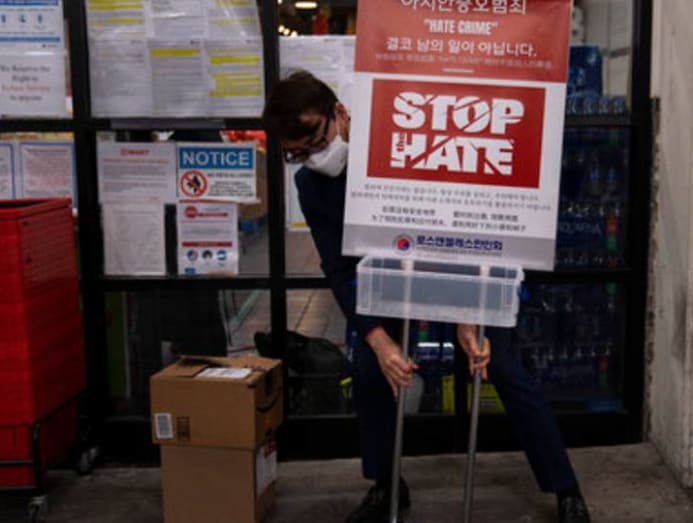
VICTORIA, Canada: In the backwash of the horrific Atlanta shootings, of which half dozen of eight victims were Asian women, contempo news headlines in Canada and the rest of the world have shed calorie-free on an increase in anti-Asian racist attacks.
These acts of violence are deeply entrenched in historical legacies of racial discrimination and have been intensified by the usage of phrases like quondam U.s. President Donald Trump's "Chinese virus".
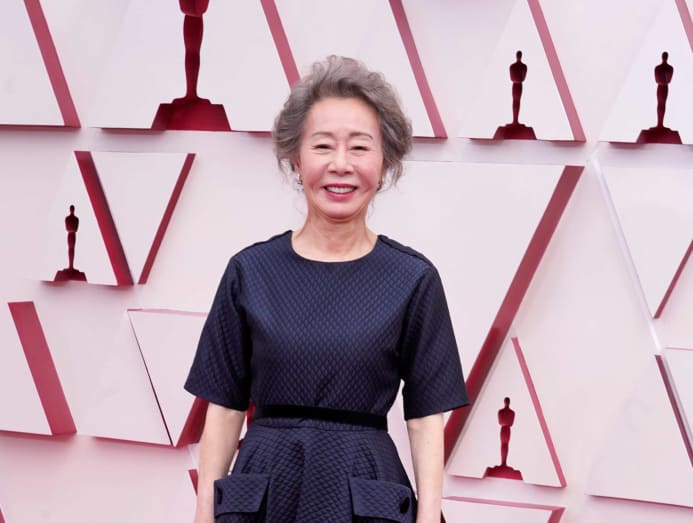
Equally this is going on, images of Asian women in mainstream media are coincidentally surfacing in the cultural sphere of film. This year's 93rd University Awards are jubilant Asian women from Chloé Zhao (who won for Best Director for Nomadland) to Christina Oh (Minari) and Yuh-jung Youn (who won for Best Supporting Actress for Minari).
READ: Communist china censors Oscars success of history-making Chloe Zhao
All of this begs the question as to whether there is a connection betwixt the convergence of increased coverage on the success of Asian women filmmakers and growing anti-Asian sentiment.
Ane may be inclined to wonder how society could possibly be racist and misogynist while jubilant Asian women and Asian people. And through celebrating them, how can perpetuating racist stereotypes exist avoided?
FINALLY GETTING THE RECOGNITION THEY DESERVE?
I want to believe that the current attention existence paid to Asian women filmmakers — such as Zhao and Lulu Wang (who adapted her This American Life audio story into the critically acclaimed 2022 feature picture show The Farewell) — means that Asian women are finally getting the kind of recognition their creative piece of work deserves.
These directors accept raised awareness of the complexities of cultural identity — non but in the fictional content of their films — simply also past speaking candidly nigh their own experiences equally immigrants and Asian-American women.
Increased representation on and off screen can transform the way that audiences call back about racial and indigenous differences.
READ: Commentary: Why Crazy Rich Asians was the terminal moving picture Communist china wanted to watch
READ: Commentary: Crazy Rich Asians should stir reflection on what wealth to bestow our kids
To some extent, the increased visibility of Asian women in mainstream media challenges the epitome of the "yellow adult female" (a term coined in Anne Anlin Cheng'southward Ornamentalism), a effigy long perceived as "mute and absent-minded" in the Euro-American popular imaginary.
Simply here are three important reasons why nosotros should resist jumping to the conclusion that Asian women have finally "made information technology" in the sphere of filmmaking and that images of Asian women at large are no longer invisible.
DON'T LUMP US ALL TOGETHER
First, don't lump all Asian women filmmakers together.
Creating infinite to foster solidarity and providing opportunities for coalition-building in the Asian-American community tin be a powerful way to combat anti-Asian racism and misogyny. But it doesn't ever make sense to group filmmakers together simply because they're Asian and women.
As individuals with complicated relationships to their roots, filmmakers like Zhao and Nanfu Wang encounter challenges — from global fans and censorship to the international prize circuit — as their films cross national boundaries in the U.s.a. and Mainland china.
Being circumspect to their "Asianness" means existence attentive to financial limitations, political negotiations and cultural inconsistencies specific to particular locales and contexts.
READ: Commentary: Unusual, enormous discrimination has been long directed at Asian-Americans
The cinematic approaches and thematic concerns of these filmmakers can vary profoundly, and making connections by examining intersections in genre, social objectives, or visual modes, for instance, tin can be merely every bit (if non more) productive every bit classifying filmmakers by race, ethnicity or gender.
THE MINORITY MYTH
Second is to be cautious about representation.
The perceived success of Asian women in the motion-picture show industry should not exist used to perpetuate the model minority myth, every bit in that location is still a dramatic gap in socio-economic, class and education level between marginalised Asian migrant labourer communities and the social status of Asian or Asian-American filmmakers.
Just because Asian women are receiving more than mainstream media coverage for their work in the film manufacture, does not mean equal attention is beingness paid to Asian women across the board. In fact, this is a good time to ask why some images of Asian women do not broadcast or some Asian people exercise not become the subject area of media attention.
We should be particularly cautious about representation that objectifies or sexualises artistic accomplishments, to make sure that Asian women in pic exercise not get a lens through which media perpetuates the long history of sexualising racist misogyny.
Adjacent, don't fail before accomplishments of Asian women filmmakers
Clinging to the narrative of a "sudden" rise of Asian women in film neglects the accomplishments of earlier Asian women filmmakers whose accomplishments may not have been justly recognised previously. This doesn't hateful that they didn't exist.
This acknowledgement is similar to the importance of recognising that the recent anti-Asian attacks on women are part of a longer historical trajectory of violence inflicted on Asian women's bodies.
READ: Commentary: Farewell to those days, when women were 'pieces of meat for men to slice'
READ: Commentary: Parasite wins big at Oscars and paves way for bigger shifts in film attitudes
WHAT THE CONVERGENCE TELLS US (OR DOESN'T)
Taking into account discussions of the "new" Cold War with China and the impact of the global #MeToo motion, the convergence of increased visibility of Asian women motion picture directors with a heightened sensation of anti-Asian violence may appear to propose that two potentially contradictory things are happening at once.
In other words, it may be tempting to enquire how our society could possibly be racist and misogynist towards Asian women and Asian bodies if their films are existence nominated for Oscars and they're being featured in starring roles.
But simply considering visibility has increased doesn't hateful that anti-Asian misogyny has disappeared. Relying on familiar stereotypes and images can make us miss a critical opportunity to address racial bigotry and to reshape the ways Asian women are viewed every bit individuals and artists.
Every bit Chinese science fiction writer Tang Fei points out in a recent interview, "Actualization on stage merely because we are women and being forgotten just because we are women … there is no difference."
Angie Chau is Banana Professor of Chinese Literature and Film, University of Victoria. This commentary beginning appeared in The Conversation.
0 Response to "Commentary: The problem with saying Asian women filmmakers have finally ‘made it’"
Post a Comment